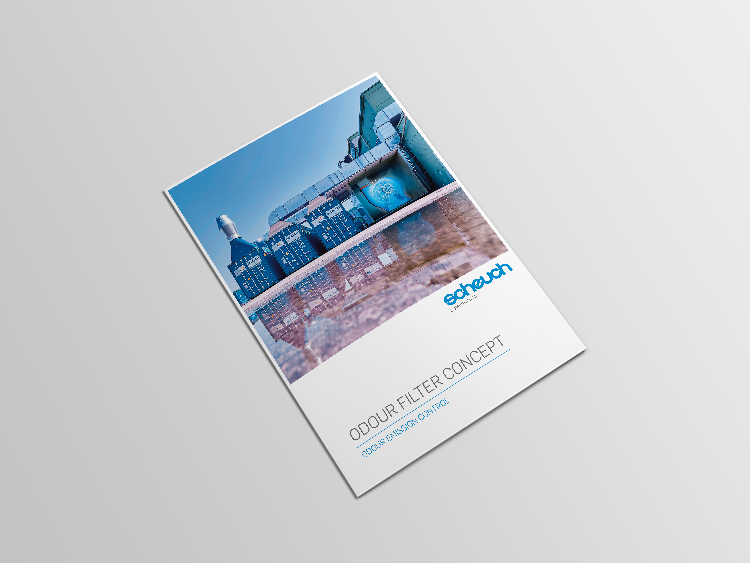
Industrial Exhaust Air Purification
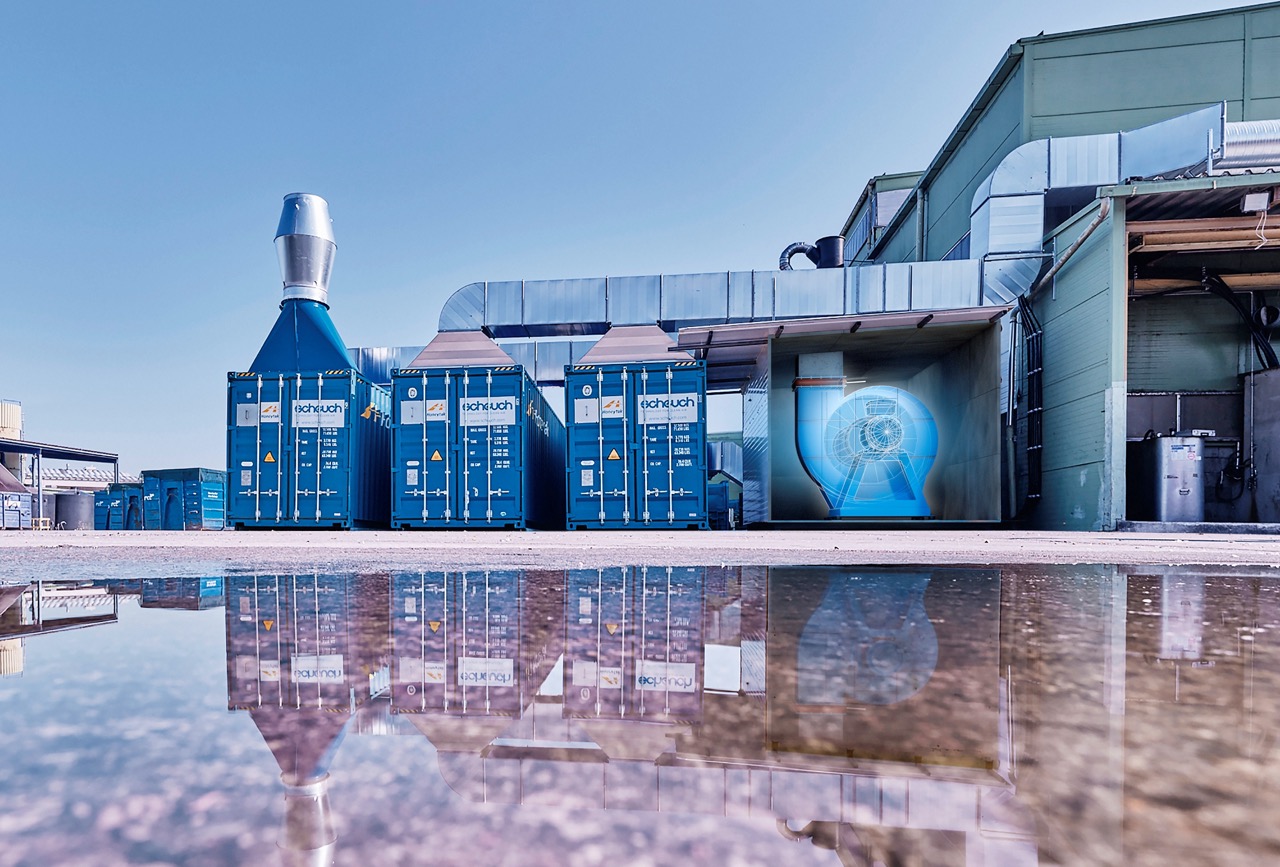
Scheuch COMPONENTS designs modular exhaust air purification systems for industrial facilities. The Odor Emission Control (OEC) concept is tailored to each facility and its odor profile. Multiple filtration stages reduce odors, help meet emission limits and support workplace safety.
Exhaust Air Purification Systems Tailored to Your Facility
Proven systems. Documented results. Designed for your operation.
Odor Concentrations Below Regulatory Limits
Across completed projects, odor concentrations per cubic meter have remained well below applicable regulatory limits.
Modular Design for Facilities & Systems
The concept adapts to different facility types and systems. Custom solutions are also available.
Multiple Filtration Stages for Varying Loads
Biofilters, duct filters and activated carbon filters address different contaminant loads in one coordinated system.
When Odor Control Becomes an Engineering Challenge
We help reduce emissions & implement a solution suited to your operation.
Odors affect employees, nearby residents and the environment. Facilities must also meet emission limits and workplace safety requirements. Identifying the right technology and verifying its performance can be difficult.
Integration with existing equipment: The system must fit into your existing setup.
Capital and operating costs: Cost-effectiveness needs to be considered from the planning stage.
Maintenance and reliable operation: Replacing filter media at the right intervals helps keep the system running.
Proof of performance: Verifiable results build confidence in the solution.
Benefits of Scheuch COMPONENTS Industrial Exhaust Air Purification
Proven systems, documented results & a solution designed for your facility
Scheuch COMPONENTS provides a coordinated system tailored to different odor loads and operating conditions.
Prevent odors from escaping through facility doorsDamper controls automatically increase exhaust airflow at a door when it opens.
Reduce odors, moisture and particulate matterThe system also removes dust and other particles from the exhaust air.
Handle a range of odor levelsDepending on odor intensity and facility size, the system can use one or more biofilters.
Need an exhaust air purification system tailored to your industry & situation?
Talk with our team about your application.
How the OEC Concept Works
Multiple filtration stages reduce odors, moisture & particles in one coordinated system.
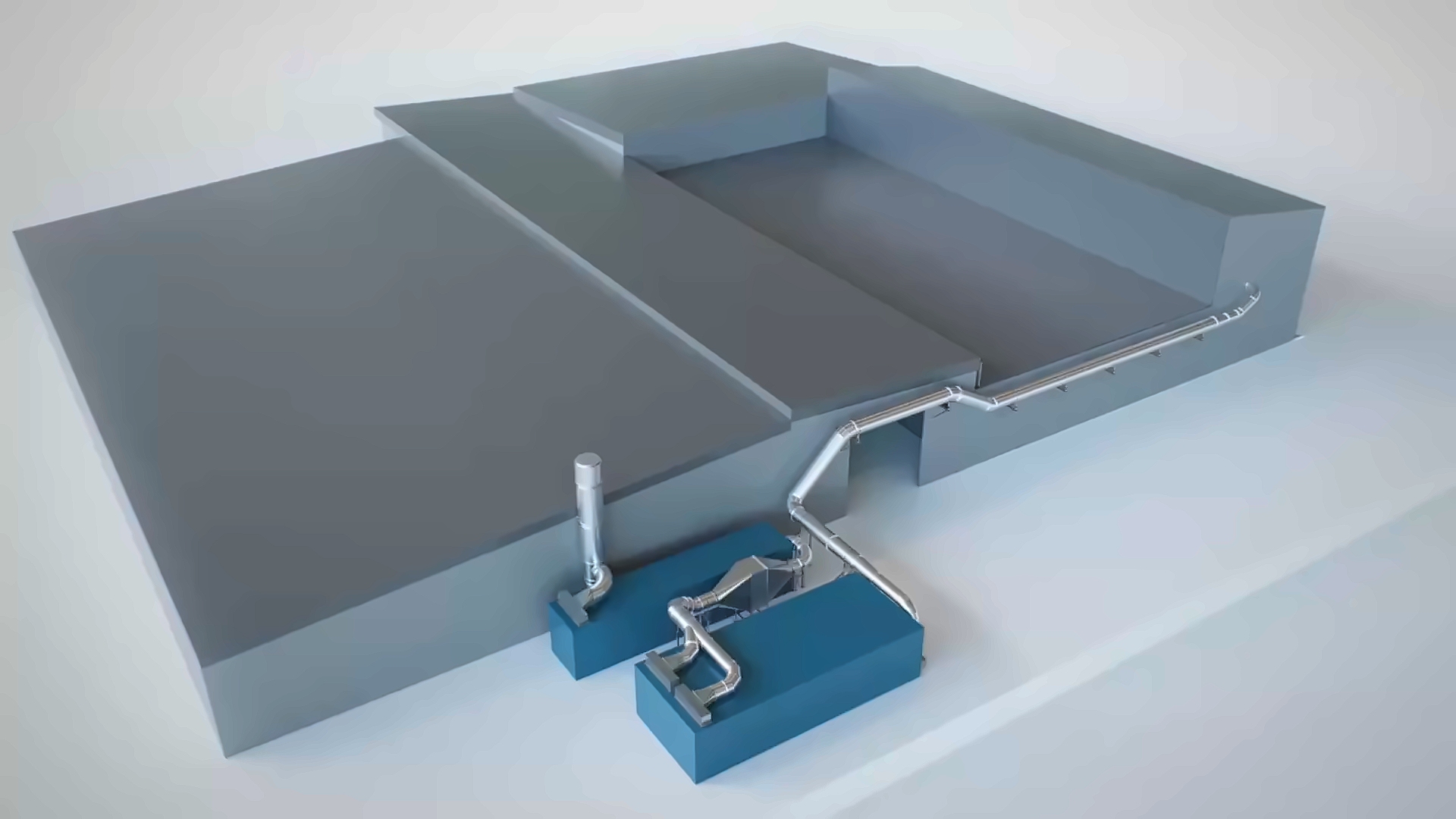
Design the system for your operation
System design considers facility size, odor intensity and operating requirements.
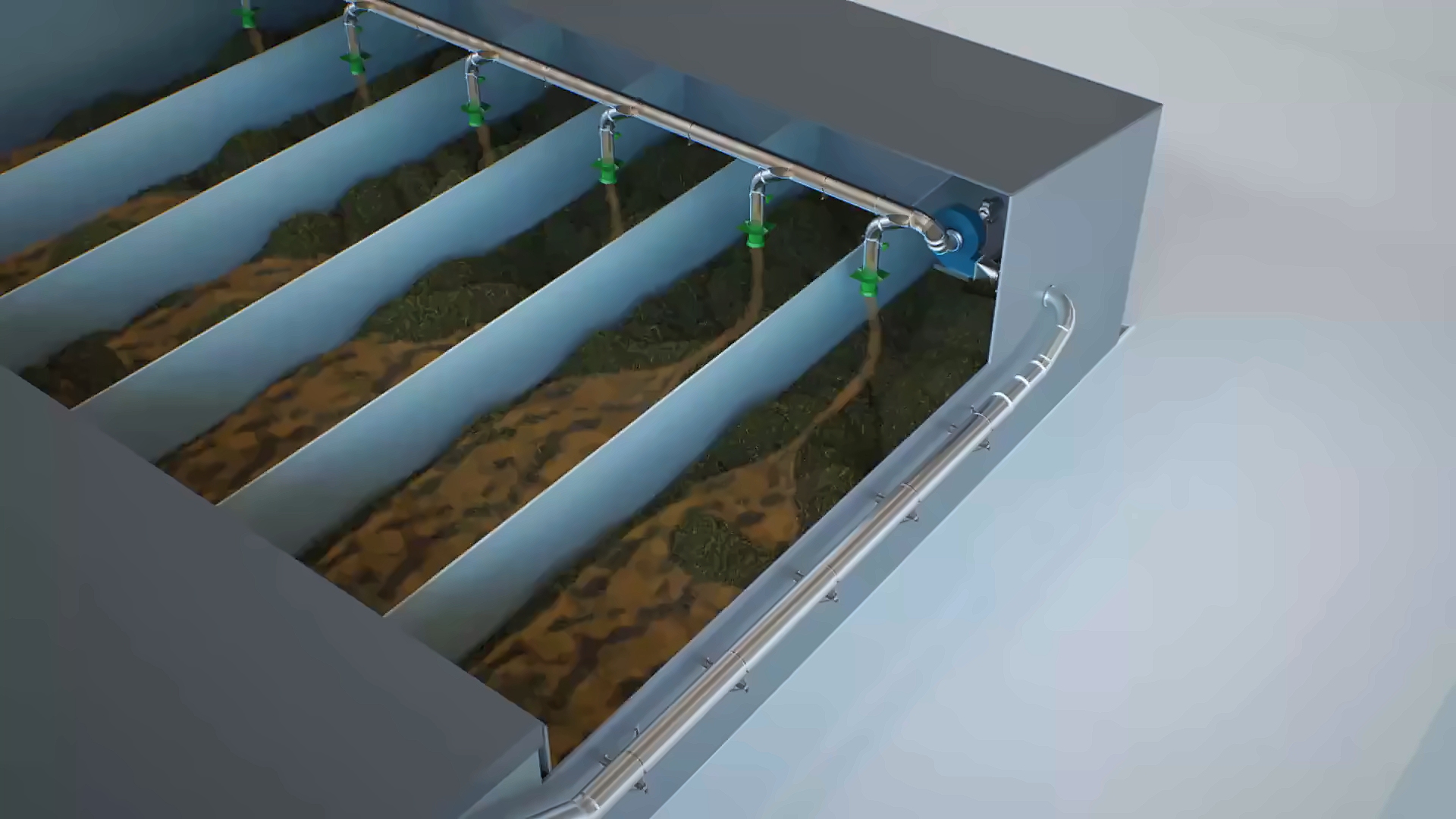
Capture odor-laden air
Biofilters treat the extracted air. Microorganisms break down odors and remove moisture.
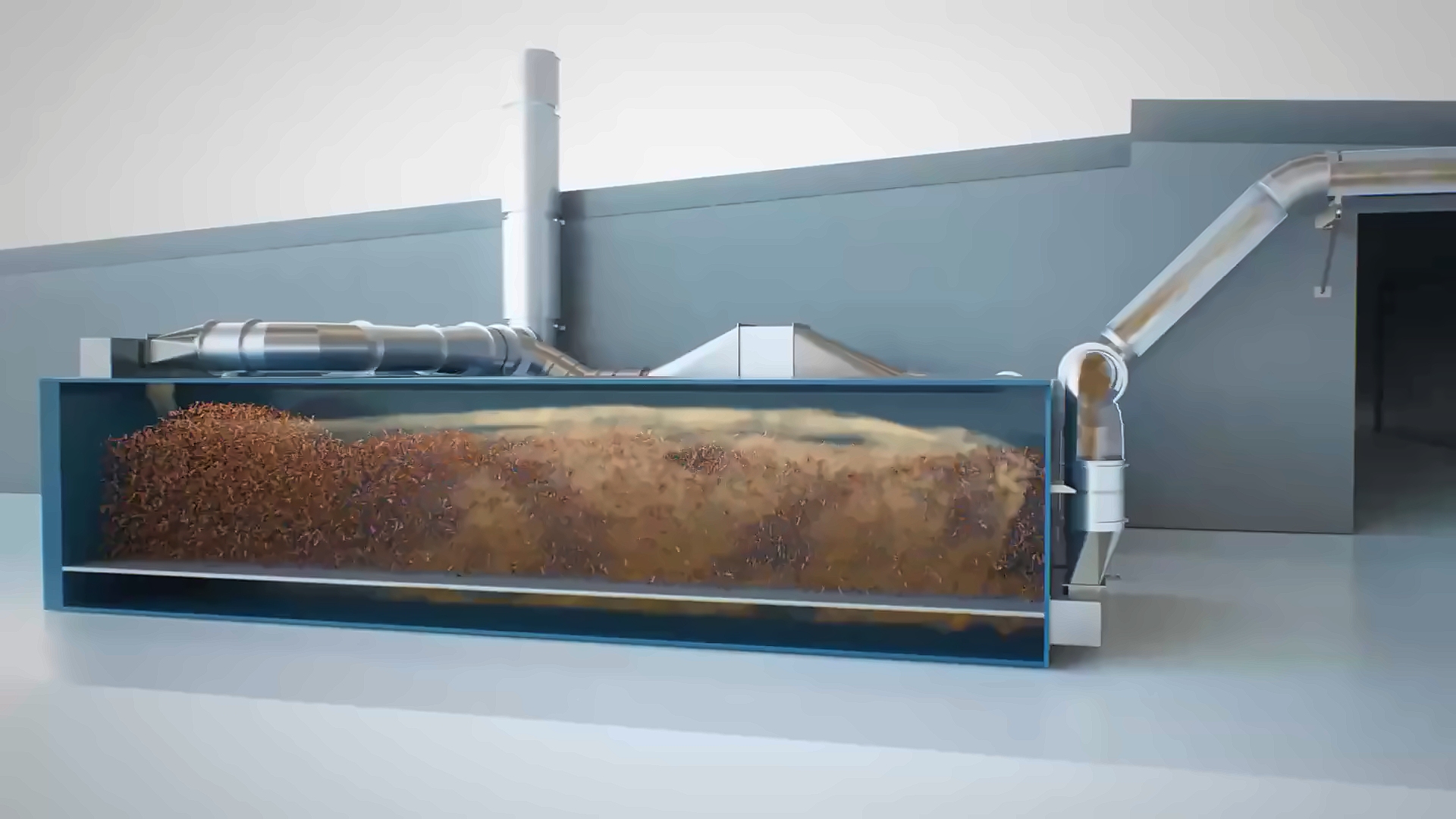
Remove dust & particles
A downstream duct filter removes dust and other particles from the exhaust air.
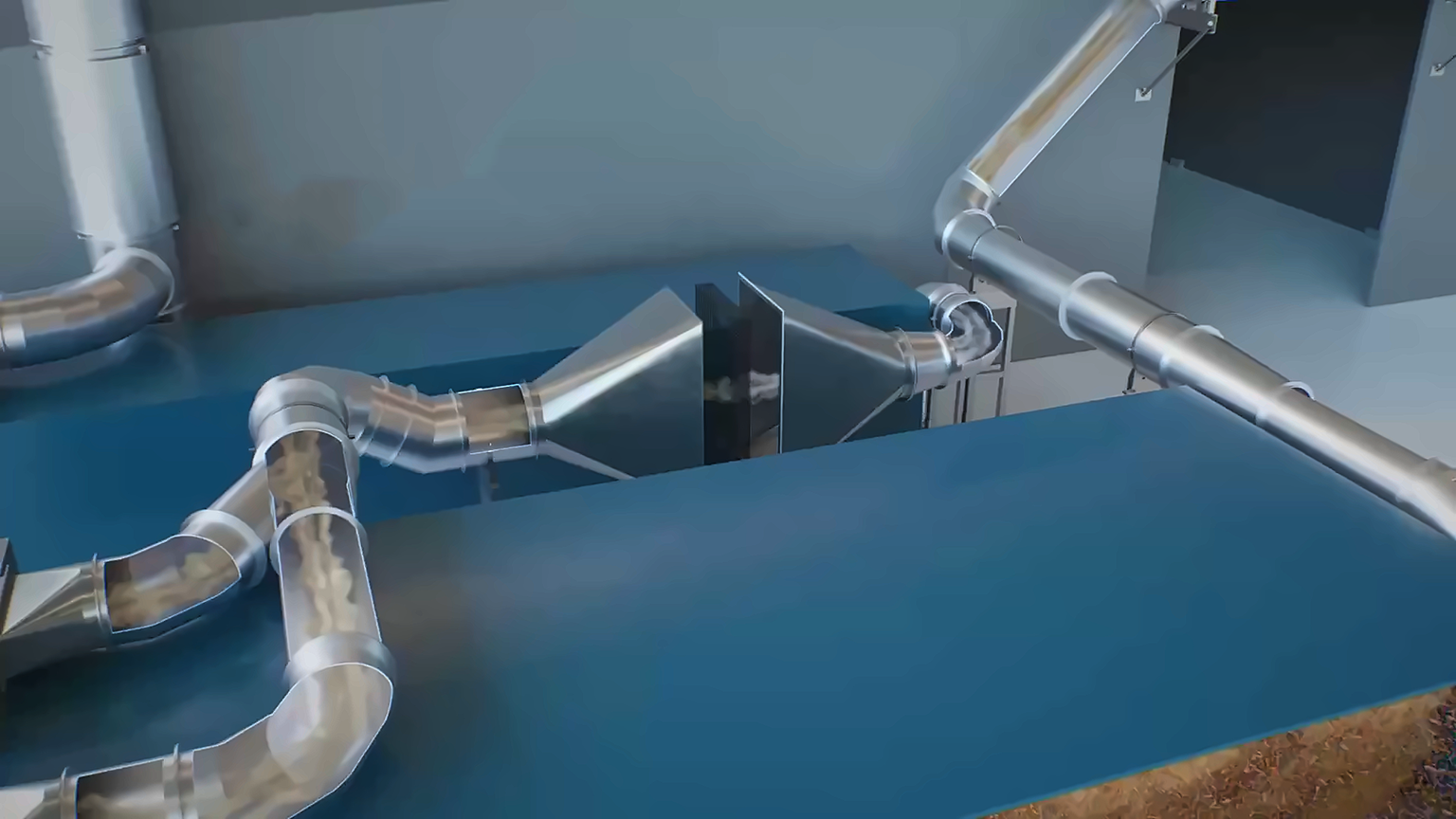
Move treated air to the next stage
A fan reliably moves the treated air to the next filtration stage.
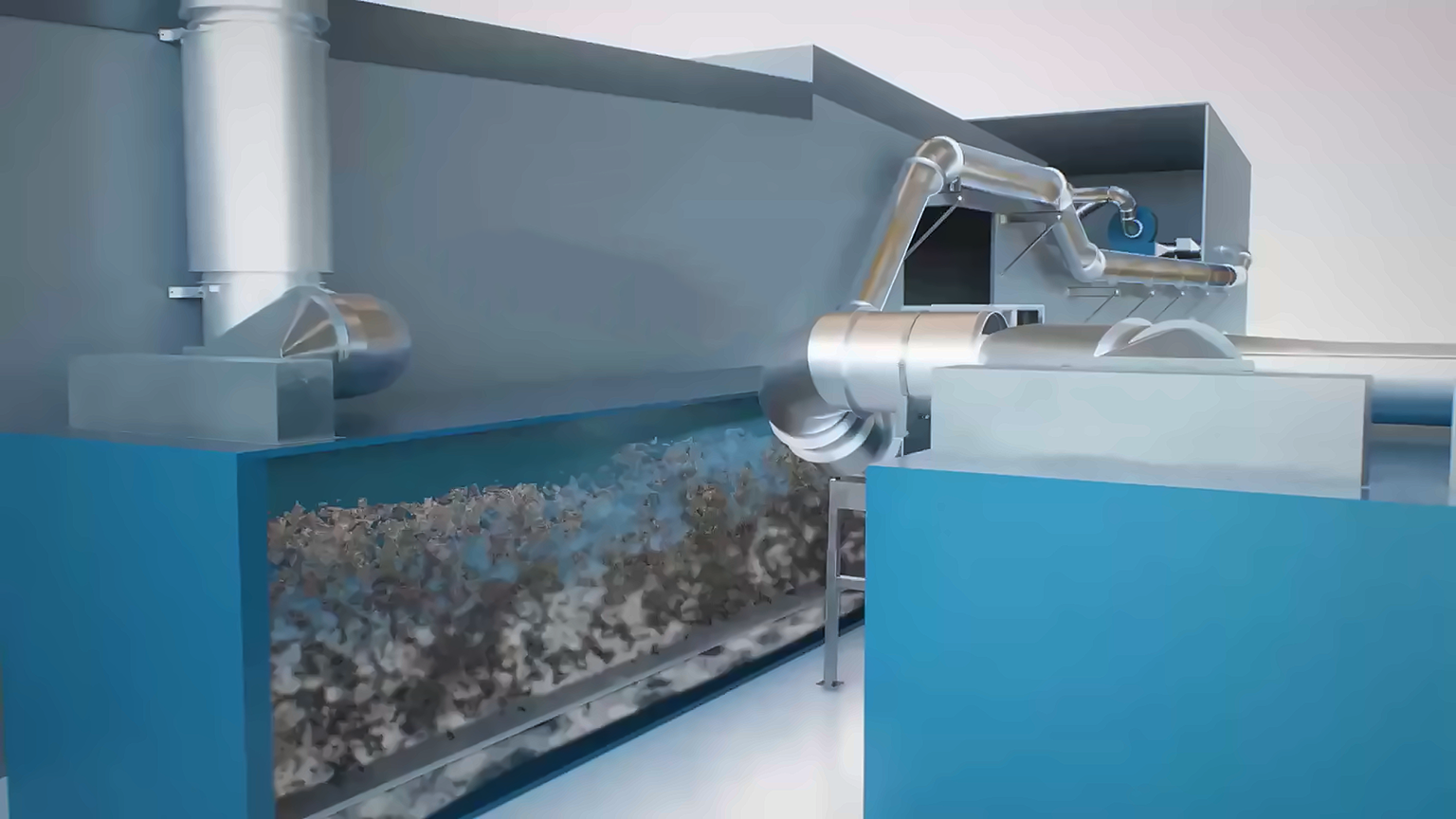
Capture remaining contaminants with activated carbon
The activated carbon filter captures residual odor compounds and pollutants from the air.
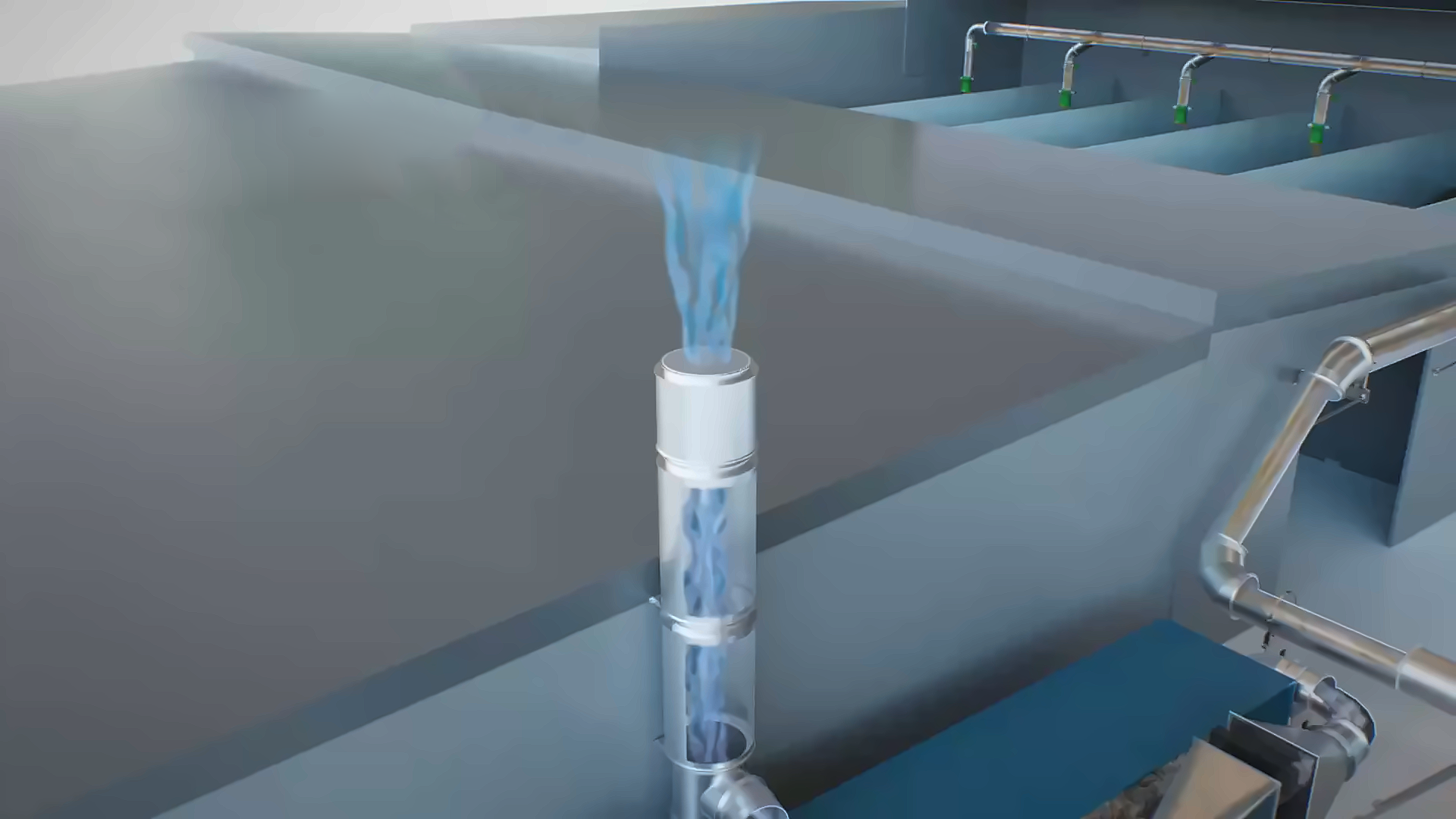
Discharge clean air
The exhaust stack then releases treated, odor-free air into the environment.
Exhaust Air Purification for a Range of Industries
Adaptable systems for different industries & applications
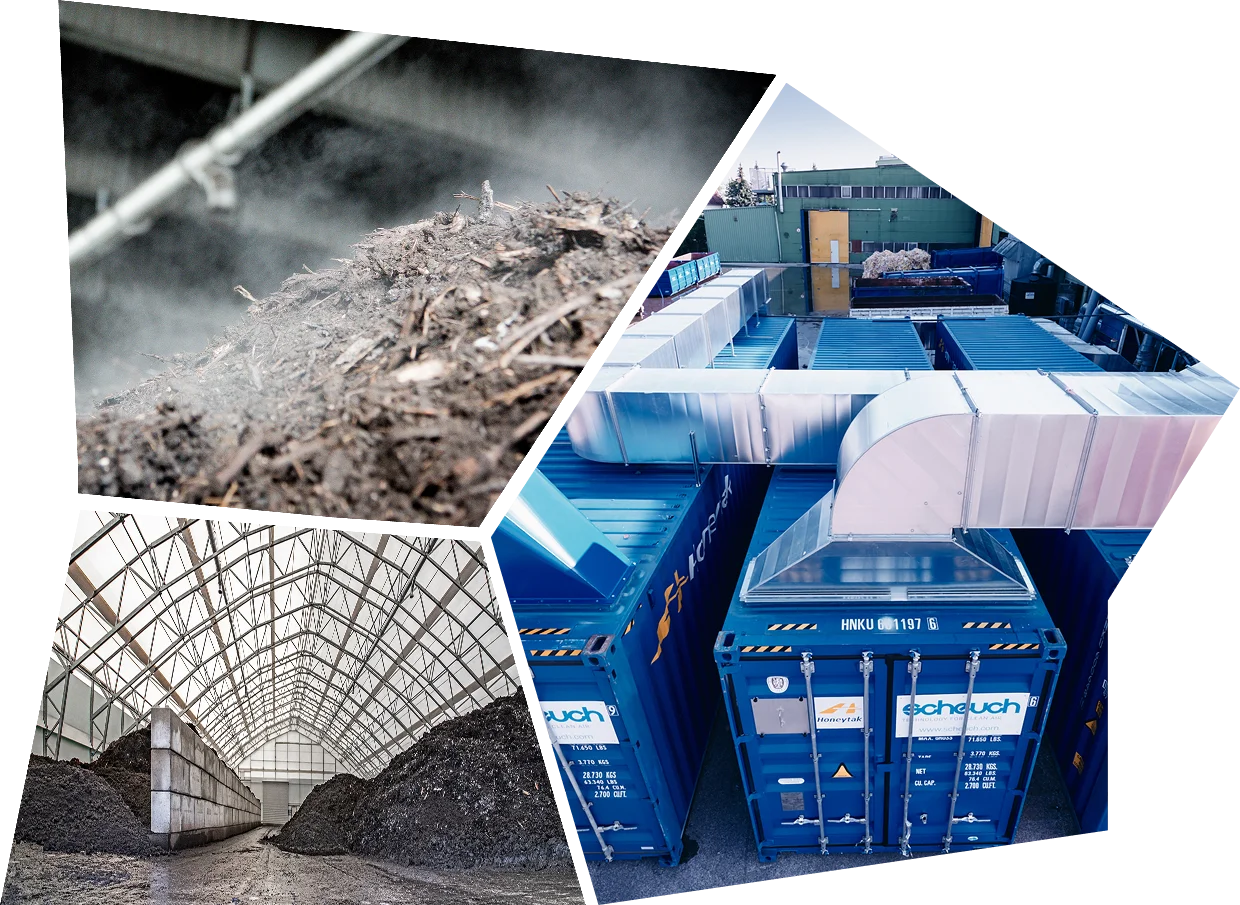
The OEC concept is designed for operations where odors are generated. Applications include wastewater treatment plants, recycling facilities, composting operations, food producers and agricultural businesses.
Custom solutions are also available.
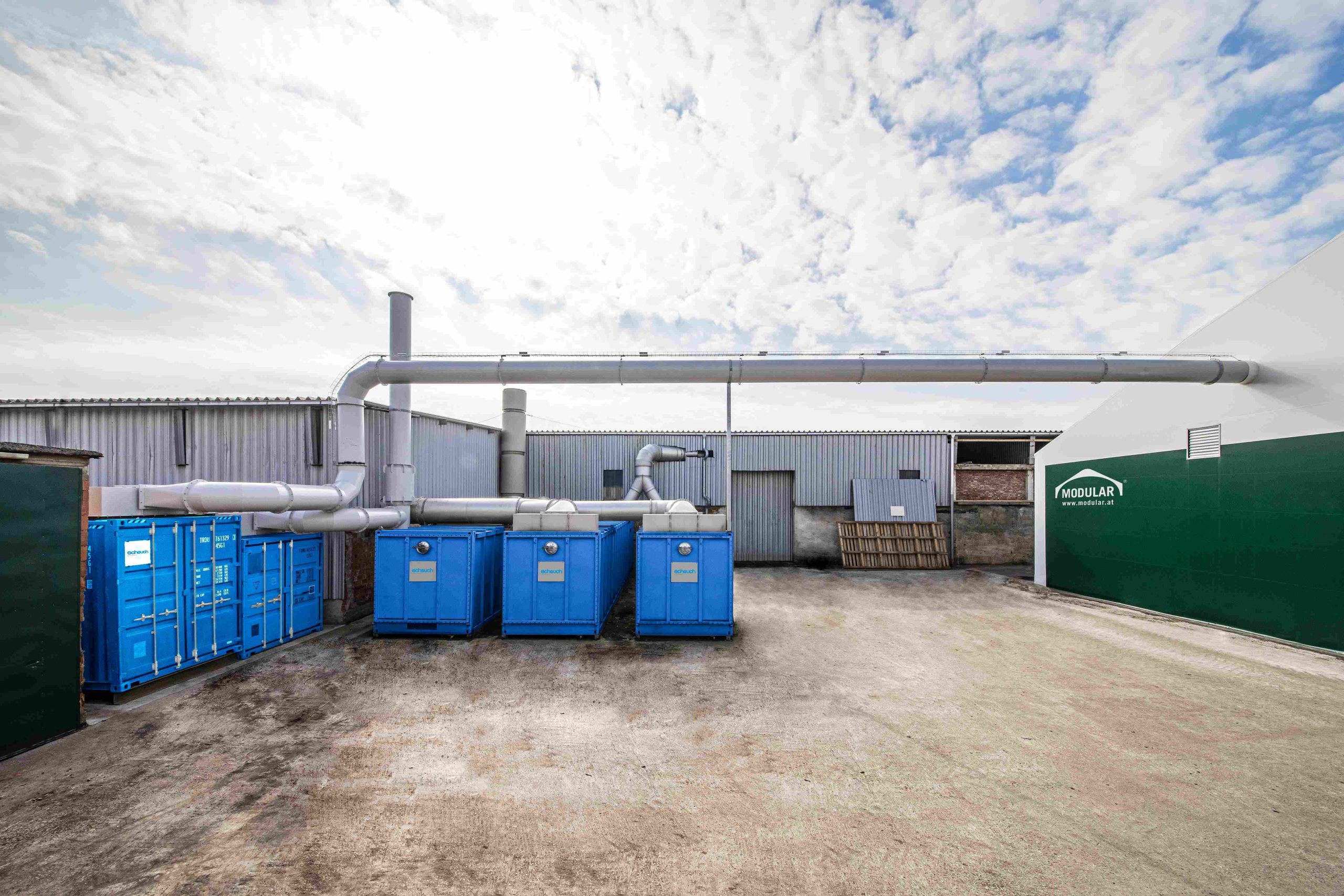
Our partnership with MODULAR Hallensysteme supports integration with different facility systems.
Customer Testimonials
Our customers share their projects, solutions & experience working with us.
Technical expertise
“On a pilot project like this, an experienced plant engineering partner like Scheuch makes a real difference. I am glad we developed the concept together.”
Johannes Duscher
Duscher Kompost GmbH
Significant improvement

“Annual complaints fell from 80 to 8. We are more than satisfied. As an added benefit, the hall temperature dropped by 3 °C.”
Johann Handler
Plant Manager
FCC Austria Abfall Service AG
Impressed
“Scheuch COMPONENTS quickly convinced us with its OEC reference product, both technically and functionally. The odor filter is practical to use, and its investment and operating costs make it a well-engineered product.”
Johann Handler
Plant Manager
FCC Austria Abfall Service AG
Locally sourced & cost-effective
“What I particularly like is that the filter media are sourced locally. They are also cost-effective and high quality.”
Johann Handler
Plant Manager
FCC Austria Abfall Service AG
Contact Us
Have questions? Our team will get back to you as soon as possible.
We will take care of your request.

Send us your message. The responsible contact person will get back to you promptly.
FAQ: Frequently Asked Questions About Industrial Exhaust Air Purification
How is the odor load assessed when designing the system?
We assess site conditions, including facility size and surroundings. We also consider odor sources, odor intensity and required airflow.
Based on this information, we configure the OEC system, including filtration stages, biofilter quantity and extraction capacity.
What information does Scheuch COMPONENTS need for a preliminary design?
We also need details about facility doors, existing exhaust systems, operating conditions and applicable regulations.
How much space does the exhaust air purification system require?
A three-container OEC system typically requires about 50 to 60 m² of space. Required clearances, access and biofilter quantity may increase the footprint.
How much exhaust air can the system handle?
A three-container system is designed for airflow of about 50,000 m³/h. Its modular design allows expansion for higher flow rates.
Can the OEC concept be retrofitted or expanded?
Yes. The modular OEC system can be integrated with existing equipment and expanded as requirements change.
How much maintenance does the OEC concept require?
The OEC concept requires little maintenance. Replace the activated carbon when it reaches capacity. No other maintenance is required because the system has no mechanical components. At reference installations, the carbon has not needed replacement for more than five years.
What ongoing costs should we expect?
Ongoing costs are limited to replacing the filter media.
How much odor reduction can the OEC system achieve?
At every project completed to date, odor emissions have remained well below applicable regulatory limits. We design each OEC system to meet the required treatment performance for that application.
Which odor-causing materials & processes can the odor filter handle?
The OEC odor filter is suited to odor-intensive materials and processes, including:
Odor-laden materials and exhaust air
- Wastewater sludge
- Compost
- Organic waste
- Recyclable materials
- Exhaust air from food production
- Exhaust air from agricultural operations
Typical processes include:
- Composting
- Wastewater sludge treatment and processing
- Handling and storage of organic waste
- Recycling and materials processing
- Food processing
- Agricultural processing and storage